October 9, 2026
What Makes a Rooftop Gin Bar NYC So Appealing
By @augustlnow874
New York has never struggled to sell a view. The city does that on its own, whether you are looking up from a crowded avenue or out across the river at dusk. What turns a nice view into a place people return to, though, is more specific. A rooftop gin bar in NYC works because it combines setting, ritual, and sharp hospitality in a way that feels both elevated and relaxed. It offers the glamour people hope to find in Manhattan, but when it is done well, it also gives them something more grounded: a carefully made drink, a breathable pocket of space above the street, and a mood that shifts with the hour.
That combination matters. Plenty of bars have skyline photos. Plenty of cocktail menus mention gin. Not all of them create the kind of atmosphere that keeps a table occupied for an extra round. The appeal comes from how the details work together, from glassware temperature to windbreak placement to which gin goes into a martini at sunset versus late at night. Anyone who has spent real time in hospitality can spot the difference quickly. A rooftop bar succeeds when the design supports the service, and the service supports the drinking experience.
Why gin feels right above the city
Gin is especially well suited to rooftop drinking because it carries a sense of freshness without being simplistic. Even in richer cocktails, it usually brings lift. Juniper gives structure, Gin Bar NYC citrus adds brightness, and botanical notes create enough complexity to reward attention without demanding it. You can sip a gin and tonic while talking, watching the skyline, listening to a DJ set, or simply waiting for the city lights to come on. The drink remains engaging in all of those moments.
That matters more than many people realize. Rooftop bars are often social spaces first and tasting rooms second. Drinks need to perform in a live environment where music, weather, and conversation are part of the experience. Gin does that elegantly. A whiskey-forward menu can feel heavy in warm weather. Vodka can disappear into the background too easily. Tequila works beautifully in some rooftop settings, especially those leaning festive or coastal, but gin has a wider tonal range. It can read classic, playful, crisp, herbaceous, floral, savory, or dry.
There is also a practical hospitality reason for gin’s popularity in these spaces. Gin cocktails adapt well to varying guest preferences. A guest who wants something clean and restrained can order a martini or a simple highball. Another who wants fruit, spice, or texture can find those qualities without losing balance. In a busy Gin Bar NYC setting, that flexibility makes service smoother and the menu more approachable.
The rooftop changes the drink before you even taste it
A cocktail consumed twenty stories up does not feel the same as that same drink in a basement lounge. Light, air, temperature, and perspective all affect perception. The most obvious difference is visual. Clear drinks shine on rooftops. A martini catches sunset tones. A Collins looks cold before it ever reaches the guest. Even the condensation on the glass does part of the work.
But the effect is not only visual. Open air changes the pace of drinking. People tend to settle in differently when they are not enclosed by walls and low ceilings. Conversation opens up. The first sip lands in a context that feels less compressed. That space can make a botanical spirit like gin seem even more expressive. Herbal notes rise more easily in fresh air than they do in rooms saturated with kitchen aromas, perfume, and crowd heat.
There is a trade-off, of course. Rooftops are operationally harder on drinks. Wind can flatten aromatic garnish. Sun can warm glassware quickly. Ice melts faster in direct heat. This is why the best rooftop gin bars in New York are not just scenic, they are disciplined. Bartenders and bar managers have to build menus that survive real conditions, not ideal ones. Strong technique shows up in small decisions: larger ice formats, sturdier garnishes, recipes designed to remain balanced as dilution increases, and service timing that keeps drinks moving from bar to table fast.
Guests may not articulate all of that, but they feel it. A rooftop bar earns trust when the second sip is as good as the first.
New York gives the format its own energy
A rooftop gin bar could exist in any city. In New York, it carries a distinct charge because the city itself is part of the drink. The skyline is not background decoration here. It is emotional scenery. It can make a quick after-work drink feel cinematic and a weekend catch-up feel like an occasion. That effect is stronger in New York than in most places because the verticality of the city is part of everyday life. Going upstairs changes the psychological frame.
There is also the matter of contrast. At street level, New York can be loud, crowded, fast, and physically demanding. A rooftop bar offers relief without asking you to leave the city behind. You are still in it, just briefly above its pressure points. That is part of the appeal. You get access to the energy without absorbing the full force of it.
For locals, this can be surprisingly important. Visitors often chase rooftops for the spectacle, which is understandable. Residents tend to value them for a subtler reason. A good rooftop creates breathing room in a place that rarely grants it. Add a well made gin drink to that equation and the experience becomes less about showing off the city and more about enjoying it.
The best ones understand timing
One of the reasons a rooftop gin bar in NYC feels so appealing is that it changes character throughout the day. A space that works at 5:30 p.m. Should not feel identical at 10:30 p.m. The strongest venues know this and build their atmosphere accordingly.
Early evening is usually when gin shines brightest. Light is softer, the air is often gentler, and the first round tends to be lighter in style. This is the hour for a proper G and T with quality tonic, a French 75 with restraint, or a martini served cold enough to feel almost architectural. Guests are transitioning out of work mode and into social mode, and gin helps that shift. It feels crisp, intentional, and celebratory without becoming heavy.
Later in the night, the room changes. Music becomes more prominent, energy rises, and guests often order richer or more assertive cocktails. Gin still works, but the menu usually needs to account for that movement. Think drinks with vermouth depth, bitters, fortified wine, spice, or more savory notes. A rooftop that only offers delicate, airy gin drinks can lose momentum after dark.
Well-run places think in these rhythms. They understand that what people want from a rooftop is not static. It moves with the sky, the temperature, the crowd, and the reason they came out in the first place.
Design matters more than people think
A rooftop bar can have a brilliant beverage program and still feel disappointing if the physical environment is careless. On paper, “rooftop” sounds like the whole concept. In practice, the appeal depends on comfort and flow.
Seating is one of the first tests. Guests need places to sit that do not force them into awkward posture, especially if they are drinking spirit-forward cocktails rather than quick spritzes. Tables need enough stability and space for proper glassware, small plates, and personal items. The bar itself should remain accessible even during peak hours. If ordering feels like a competitive sport, the mood suffers fast.
Wind management is another big factor, and one that separates well-designed rooftops from merely photogenic ones. New York rooftops can become surprisingly harsh even on pleasant days. Strategic barriers, greenery, partial enclosure, and heat sources all shape whether a guest stays for one drink or three. Good operators make these interventions feel seamless rather than defensive.
Sound is just as important. A rooftop should feel lively, not exhausting. Gin invites nuance, and people do want to talk. Music that overwhelms every table can flatten the experience. On the other hand, a rooftop that feels acoustically dead can come across as sterile. The best spaces strike a balance where the city hum, the crowd noise, and the soundtrack all support the evening rather than compete with it.
The menu tells you whether the bar is serious
You can learn a lot about a rooftop gin bar from the first page of its menu. If gin appears as an afterthought, tucked between generic vodka drinks and sugar-heavy signatures, the concept may be more about the view than the bar program. A place that truly understands gin usually presents it with confidence and range.
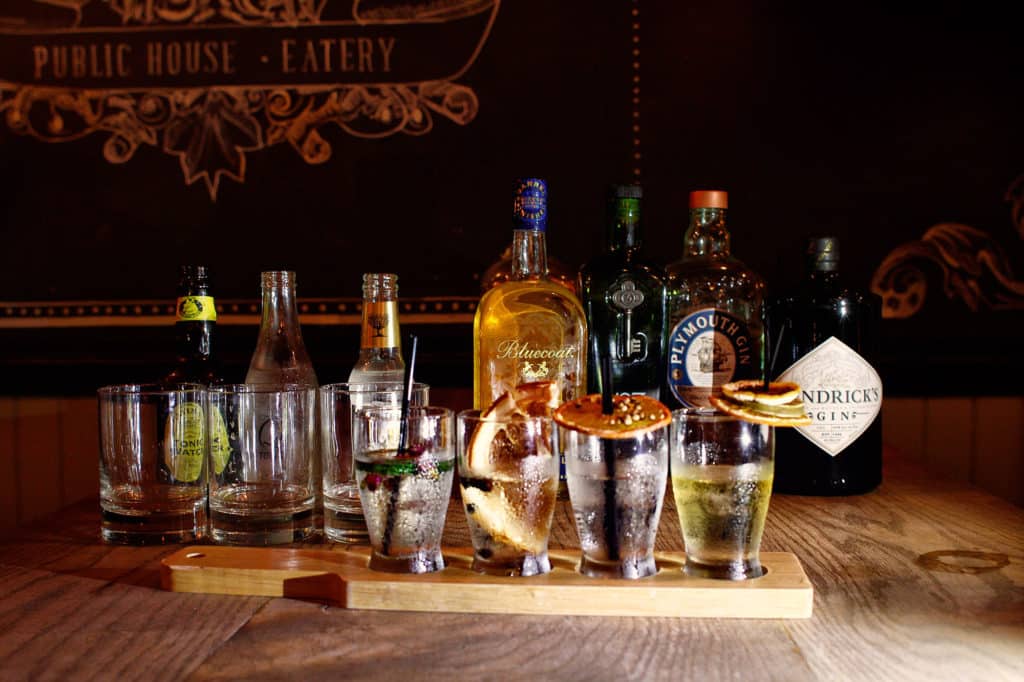
That does not mean the menu needs to be encyclopedic. In fact, too many gin options can become performative. What matters is curation. A strong list might include a London dry for structure, a contemporary botanical gin with softer juniper, a citrus-forward option, and perhaps a more savory or floral bottle for guests who want something distinctive. The point is not volume. The point is intent.
The same is true of tonic. Cheap, overly sweet tonic can drag down even an excellent spirit. Better rooftop bars treat tonic as a real ingredient, not a mixer of convenience. Glassware also reveals standards. A proper copa glass, a chilled Nick and Nora, or a sturdy highball are not affectations when used correctly. They shape temperature retention, aroma, and how the guest experiences the drink.
A serious gin program often includes a few markers:
- classic cocktails executed cleanly, especially martinis, Negronis, and gin and tonics
- a concise range of gins with different botanical profiles
- thoughtful garnish choices that add aroma rather than clutter
- staff who can explain the difference between styles without reciting scripts
- seasonal drinks that respect gin’s character instead of burying it
Those details do not need to be flashy. In many cases, the best expression of quality is restraint.
Hospitality is what turns novelty into loyalty
The first visit to a rooftop is often driven by curiosity. The second visit depends on service. This is especially true in New York, where guests have options and patience can run thin.
A professional team makes the room feel easier than it is. Hosts manage arrival pressure without making people feel processed. Bartenders read guests accurately, steering one group toward martinis and another toward lower-alcohol gin serves if that is what suits the moment. Servers understand pacing. They know when to check back, when to let a conversation continue, and when a table is ready for another round.
This sounds basic, but rooftop service has unique complications. Elevators bottleneck. Weather changes quickly. Large groups can disrupt floor flow. Guests often arrive with expectations shaped by social media rather than hospitality reality. A well-trained team absorbs that friction. They keep the room from feeling frantic, even when it is busy.
The bars people rave about are usually not the ones with the tallest building or the loudest crowd. They are the ones where the staff handled the details so smoothly that the night felt effortless.
Why gin suits both celebration and routine
One subtle strength of a rooftop gin bar is its versatility. It can host milestone occasions, date nights, business drinks, solo unwinding, and casual catch-ups with equal credibility. Gin helps bridge those use cases because it can feel special without feeling formal.
A martini before dinner still carries an old New York glamour. A gin spritz at golden hour feels lighter and more social. A tonic with fresh citrus can work on a hot afternoon when anything richer would drag. That range allows a rooftop gin bar to avoid becoming a once-a-year destination. It can live in people’s regular rotation.
This matters commercially, but it also shapes the atmosphere. Bars that survive only on special-occasion traffic often feel transactional. The best rooftop gin bars in NYC attract a mix of guests: tourists taking in the skyline, neighborhood regulars who know the staff, industry people stopping by on an off night, and office teams decompressing after a long day. That mix gives the room texture. It keeps the place from feeling like a set.
There is a real sensory payoff in a good gin and tonic
The simplest order at a gin bar is often the one that reveals the most. A well-made gin and tonic on a rooftop can be deeply satisfying in ways that are easy to underestimate. Bitterness from tonic keeps sweetness in check. Carbonation sharpens the edges. Citrus oils hit first on the nose, then the botanicals open up on the palate. In warm weather, the drink feels restorative. In cooler weather, it still retains enough structure to feel purposeful.
That sensory clarity matters because rooftops can pull focus away from the glass. Complex tasting notes are less meaningful if the guest is half-turned toward the skyline and speaking with friends. A good gin and tonic meets the environment where it is. It is not demanding, but it is never dull when made properly.
One sign of a thoughtful bar is that they do not overbuild this drink. You do not need a small garden clipped into the glass. One citrus expression done well is often enough. Sometimes a sprig of rosemary or a few cracked peppercorns makes sense, depending on the gin. Often it does not. Restraint reads as confidence.
Not every rooftop gets it right
For all the appeal, the concept can go wrong in predictable ways. Some rooftops lean too hard on aesthetics and neglect the actual drinking experience. Others mistake extravagance for quality, loading the menu with expensive ingredients that do not improve balance. There are also bars that overcomplicate gin cocktails in an effort to seem original, only to produce drinks that are fussy, warm by the time they arrive, or impossible to enjoy casually.
Guests usually notice the shortcomings quickly. Common weak points tend to include the following:
- drinks that prioritize appearance over temperature and balance
- long waits at the bar caused by poor layout or staffing
- music levels that make conversation difficult
- menus with no clear point of view on gin
- seating and service setups that feel rushed or uncomfortable
These flaws are not minor. Rooftop bars ask more from guests, often in price and patience, so the margin for disappointment is smaller. When people choose a rooftop, they are buying into an experience, not just a beverage.
Seasonality is part of the charm
One reason rooftop gin bars remain compelling in New York is that they are not equally available in the same way all year. Even with heaters, enclosed sections, and cold-weather adaptations, seasonality still shapes the appeal. Spring feels anticipatory. Summer rooftops can be electric but also demanding, especially in heat waves. Early fall is arguably the sweet spot, when the air sharpens and gin’s botanical profile feels especially vivid. Even winter, in a partially enclosed rooftop setting, can make a dry martini feel almost ceremonial against the city lights.
This shifting calendar keeps the format fresh. People associate certain gin Gin Bar NYC serves with particular weather and moods. The first rooftop G and T of a warm season lands differently because it marks a transition. It is not just a drink order. It is a cue that the city is opening back up in a certain way.
Operators who recognize this build menus and service models that reflect the season rather than resist it. They lighten where necessary, deepen where appropriate, and respect the fact that drinking habits change with the wind, the hour, and the month.
What people are really paying for
At a glance, the appeal of a rooftop gin bar in NYC might seem obvious: a skyline, a cocktail, a polished crowd. But what keeps people coming back is not the postcard value. It is the layered experience. Guests are paying for the lift that comes from leaving the street behind, the precision of a drink that feels suited to the setting, and the sense that for an hour or two the city has become less abrasive and more generous.
A good rooftop gin bar knows that every part of the night carries weight. The elevator ride up builds anticipation. The first glimpse of the skyline resets the mood. The drink arrives cold, balanced, and visually clean. The service lands at the right tempo. Conversation settles in. Light changes. The city becomes part of the glass.
That is the real appeal. It is not only about luxury, trend, or spectacle. It is about how a space above the city can make a familiar spirit feel newly exact, and how New York, for all its intensity, still knows how to reward people who rise above the noise for a proper drink.
The Winslow
243 E 14th St
New York, NY 10003, United States
Phone: +1 212-777-7717
FAQ About Gin Bar NYC
How to do a gin tasting?
Start with a small pour and gently smell the gin before taking a small sip. Notice its juniper, citrus, floral or spice notes, then compare how the flavor changes with a little water or tonic. At a gin bar, ask the bartender to explain the selection and botanical pairings.
How to make the best tasting gin and tonic?
Use chilled gin, fresh tonic and plenty of ice. A common starting ratio is one part gin to two parts tonic, adjusted to taste. Choose a garnish that complements the gin's botanicals and stir gently to preserve the bubbles.
What is the smoothest tasting gin?
There is no single smoothest gin for everyone. Perceived smoothness depends on the botanical recipe, alcohol strength, serving temperature and mixer. Describe whether you prefer citrus, floral, herbal or juniper-forward flavors so a bartender can suggest a suitable style.
❧